The 1923 Ford Model T Coupe featured in this article is a beauty. Total 1923 Ford Model T production was 1,831,000 vehicles of which the coupe model accounted for 313,000 units. Although Ford never produced a coupe with the designation “Doctor’s Coupe” these Model T Coupes were occasionally referred as coupes for the doctor who would travel making house calls.

The Simplicity of the Model T
If there’s one description to place on the Ford Model T it was simplicity. This was a simple yet extremely useful automobile. The engine was cast in one block and the four cylinder engine delivered 22 HP. Three pedals and a hand lever operated the transmission. In a large way, the simplicity of the Ford Model T was something cherished by the elder Ford. History tells us that Henry Ford was a man who generally resisted change. As an example, during the 1930′s when his competitors were adding technical improvement to their cars, such as hydraulic brakes, Henry Ford resisted until the last. Much of the credit for convincing the elder Ford to eventually agree to changes was given to his son Edsel Ford.
The Low Cost Ford Model T
Henry Ford was not responsible for inventing the automobile or the assembly line. What Ford did accomplish was using an assembly line technique to produce cars which could be afforded by everyone. The Model T was Ford’s Universal Car.
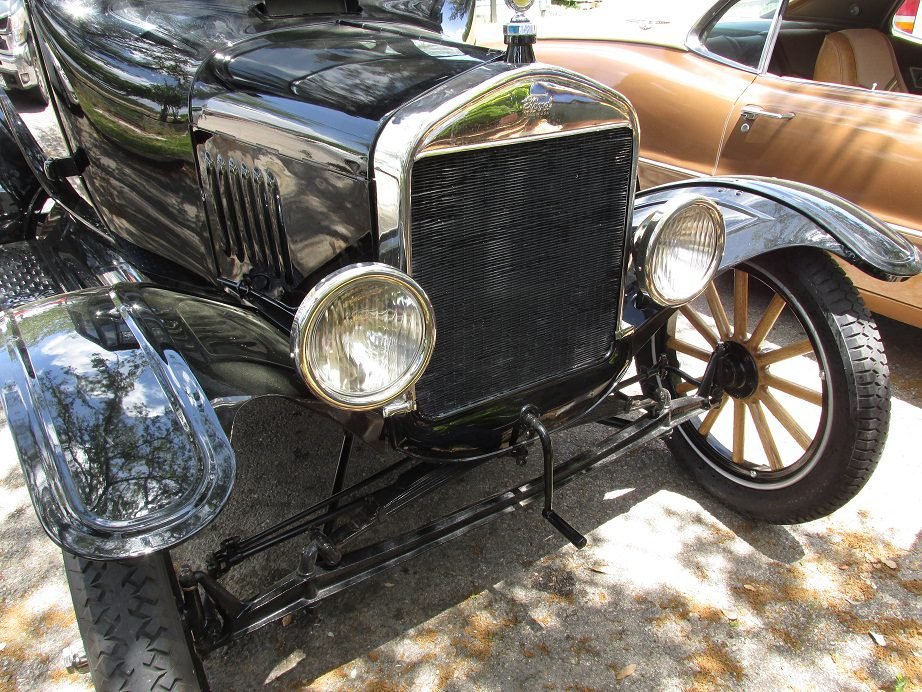
The Model T was considered a low priced vehicle by comparison to other early automobiles. A 1923 Ford Model T Coupe was priced new at about $540. The affordability, the cars availability and it’s reputation for dependability, made motoring possible for many people who had initially been priced out of the market. Ford’s use of mass production techniques allowed the company to produce automobiles for the common person at a price they could afford. Ford’s mass production techniques were adopted by it’s chief competitors one after the other.
Times were changing during the 1920′s. Ford’s Model T managed to become the best selling car year after year however their share of the market was shrinking. Competition increased and General Motors made a lot of progress with their assembly line production methods. The car that was first built in 1908 at the Piquette Avenue plant in Detroit Michigan would finally make way for another model in 1927.

While Henry Ford was resisting change, his chief competitor General Motors as actually afraid that the automobile market was hitting a saturation point. GM then introduced the annual model change who’s purpose was to boost sales by urging buyers to regularly trade in their cars for new ones. If new models were introduced annually, a certain amount of buyers might determine that their cars were outdated and needed to be traded in on a new model. The plain fact is that this sales tactic was effective.
The Model T Spurred the Aftermarket Industry
The Ford engines were so durable that people found uses for these as twenty horsepower power sources for tasks outside of transportation. Some were made into farm tractors. There has never been a car built that had so many utilitarian purposes than the Ford Model T. Many believe that the Ford Model T started the car aftermarket trade.
1923 Ford Model T Specifications
Up until 1926 Ford Model T engines delivered about 22 horse power. The engine was an 177 cubic inch inline four cylinder. Top speed for the Model T was about thirty mph on a smooth road.
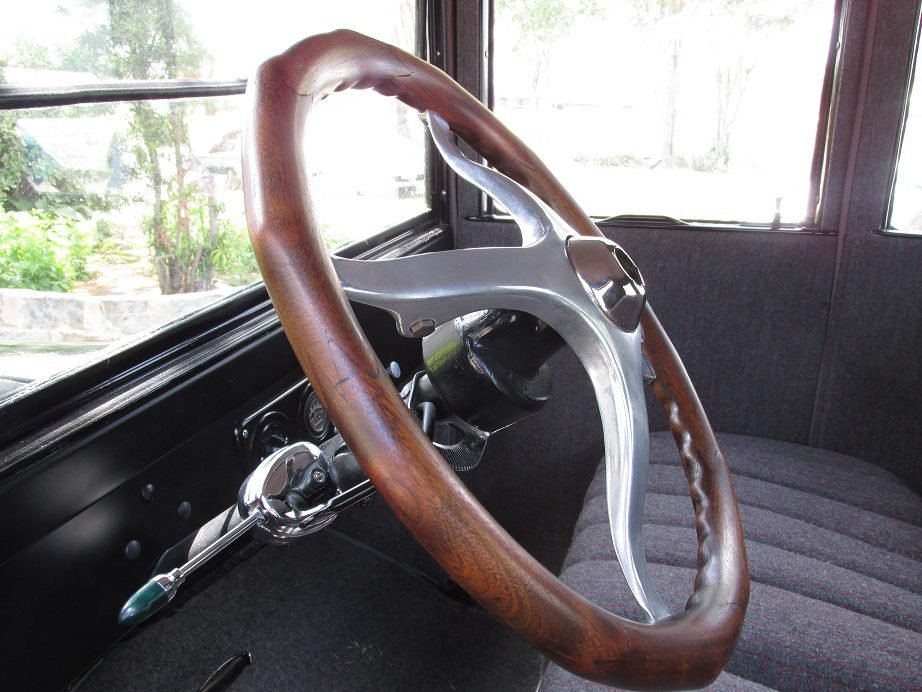
The Model T’s transmission was a planetary gear type. This was a three speed but actually a two speed as we know today because one of the three gears was reverse. The transmission was operated using three foot pedals and a lever.
The wheels were wooden spoke and the brake was operated by a right pedal that put a band around a drum in the transmission that stopped the rear wheels.
The Model T Coupe weighed just over 1,500 lbs. When all steel bodies were introduced in 1926 the car’s weight increased about 300 lbs. The wheelbase was 100.0 inches, the width 66.0 inches and the overall length was 134.0 inches.
See the AutoMuseumOnline articles on the links below…
The 1931 Ford Fordor Town Sedan
1934 Ford Model 40 V-8 Tudor Sedan
 One of the best books available on the subject of Henry Ford, the Ford Model T and Ford’s influence on early 1900′s society is Wheels For The World by author Douglas Brinkley.
Another good book on the Ford Model T is The Legendary Model-T Ford: The Ultimate History of America’s First Great Automobile by author Tom Collins.
Collecting Ford Model T’s
The value today of a Ford Model T can best be determined by researching no reserve auctions. Obviously, condition, originality and degree of restoration will determine final price. Generally, Ford Model T’s in good condition sell above $10,000 with the average price being in the range of perhaps $12,000 to $16,000.
(Article and photos copyright 2014 AutoMuseumOnline)